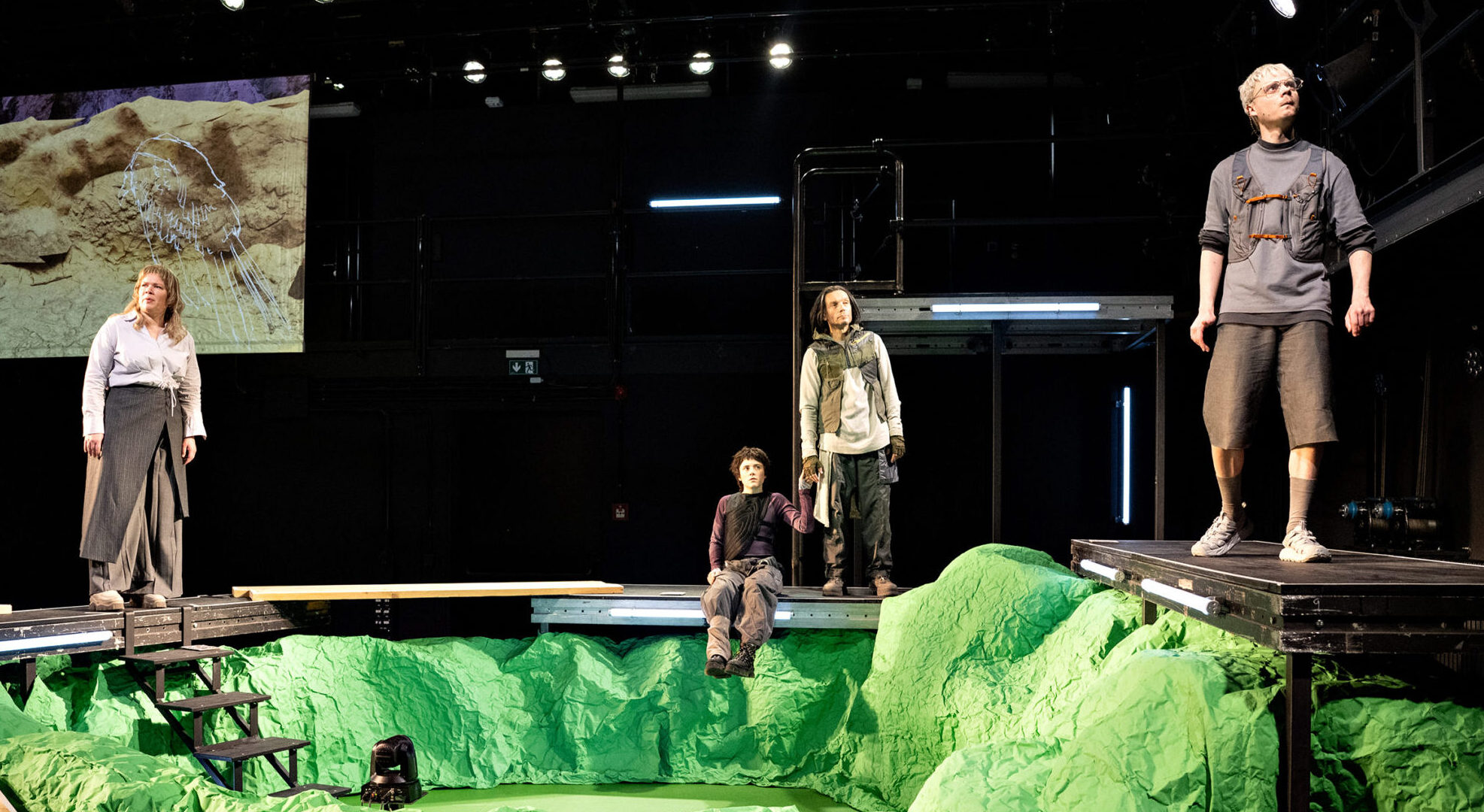
Published in 1985, science fiction writer Ursula K. Le Guin creates her own world set in an undefined future in California. The Kesh are the survivors of a disaster and while they have modern technology, they only use it insofar as it serves their modest lifestyle. Set up as an anthropological project of a futuristic archaeology, »Always coming home« is a unique collection of lost items: Poem and drama, myth and song interwoven to form a convincing vision.
For the collective F. Wiesel, it’s their third performance at Theater und Orchester Heidelberg after »Restworld« and »Die Gleißende Welt«(The blazing world). Their works are shaped by influences from object theatre in combination with digital storytelling strategies and intersectional perspectives on science-fiction.
«I found, at last, the town I had been hunting for. After digging in several wrong places for over a year and persisting in several blockheaded opinions—that it must be walled, with one gate, for instance—I was studying yet once more the contours of my map of the region, when it dawned as slowly and certainly as the sun itself upon me that the town was there, between the creeks, under my feet the whole time. „And there was never a wall; what on earth did they need a wall for?»
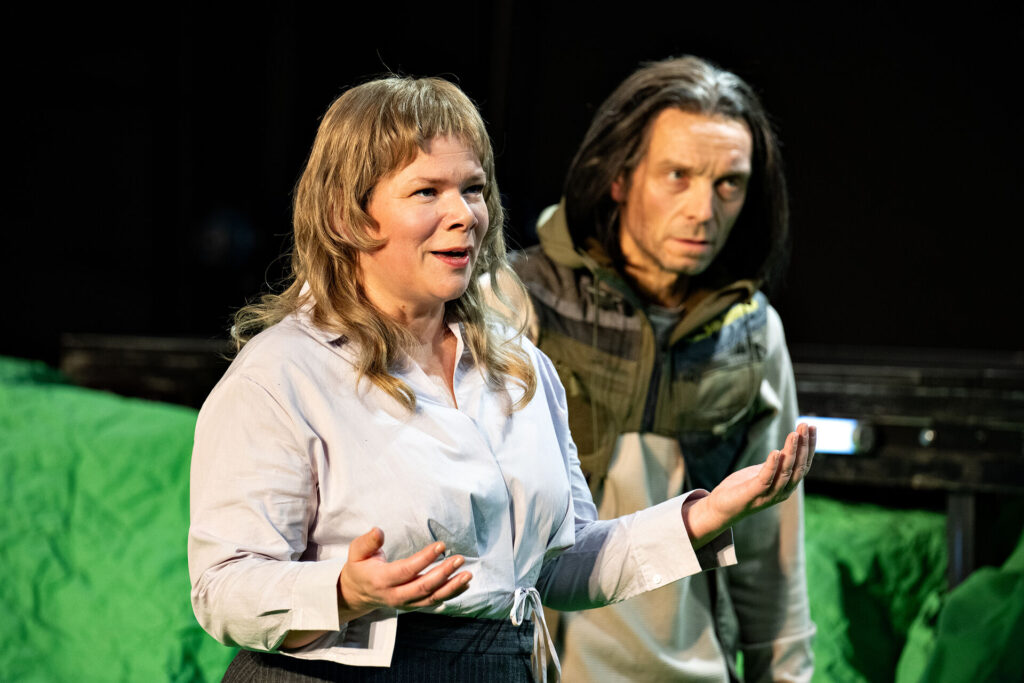
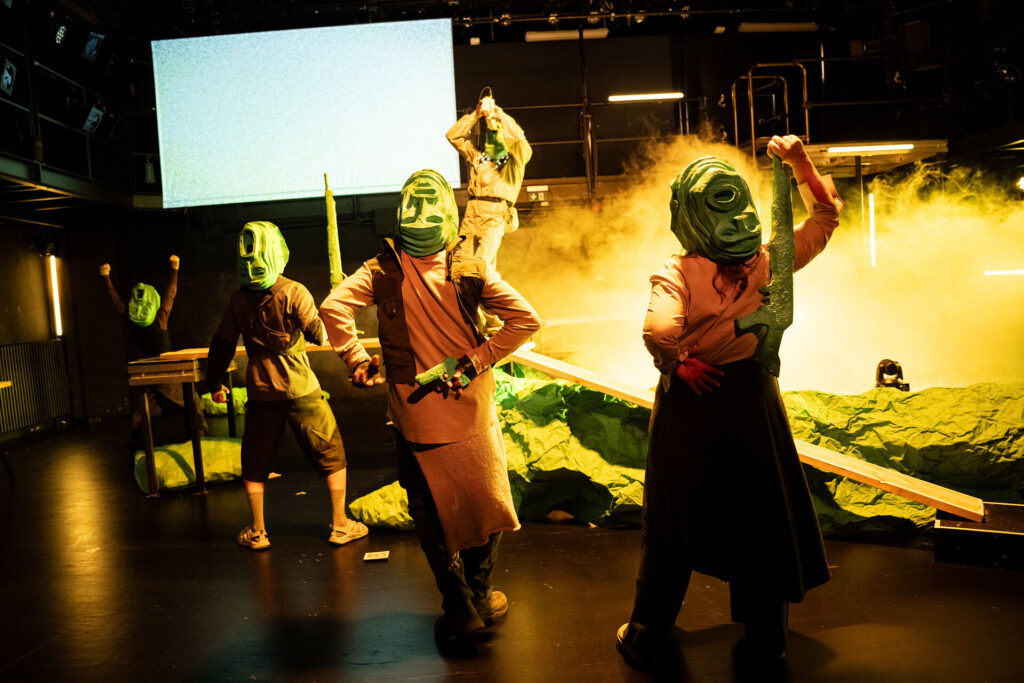
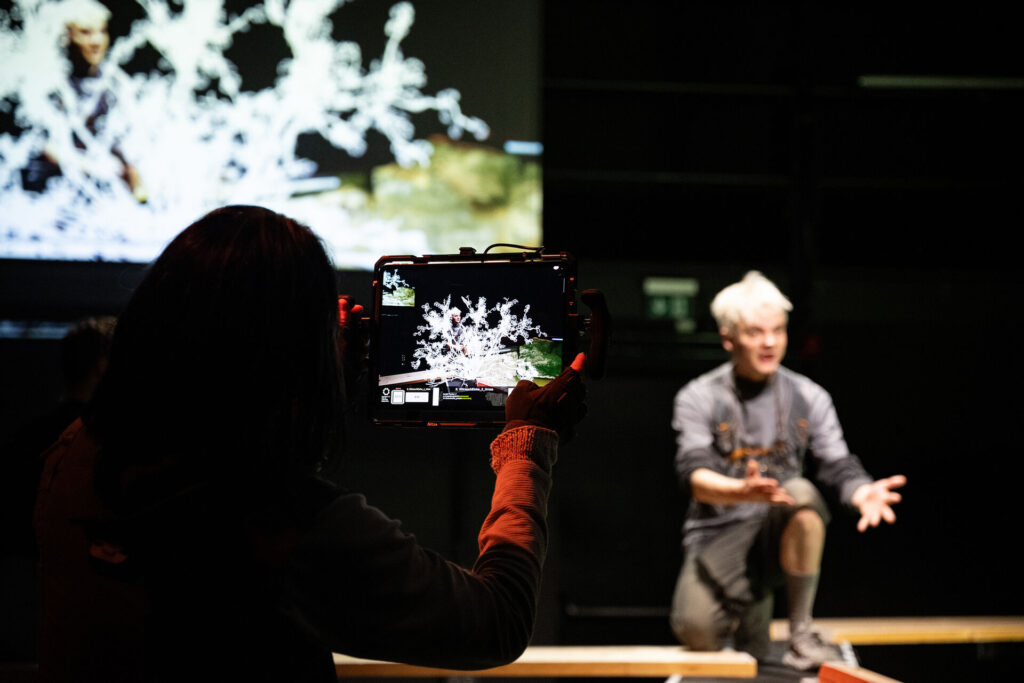
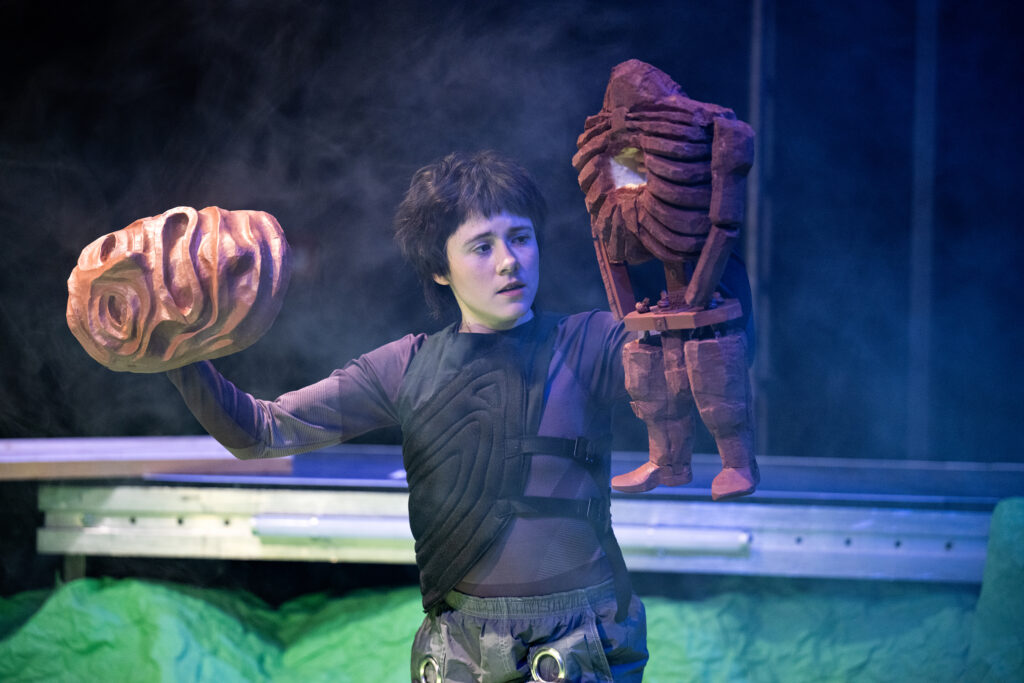
Regie, Textfassung, Bühne: F.Wiesel (Hanke Wilsmann, Jost von Harleßem)
Nach dem Roman «Always coming Home» von Ursula K. Le Guin
aus dem amerikanischen Englisch von Matthias Fersterer, Karen Nölle und Helmut W. Pesch
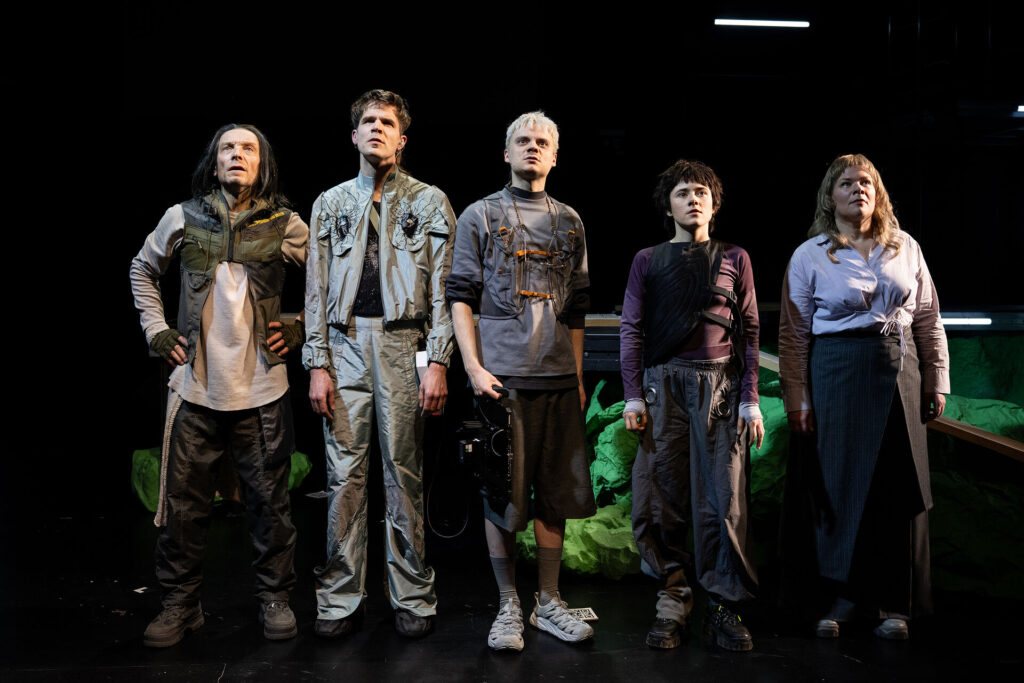
with: Jacob Bussmann, Katharina Quast, Hendrik Richter, Esra Schreier, Leon Maria Spiegelberg
Music: Jacob Bussmann
Kostüme: Naomi Kean
Animationen: Christian Schlaeffer
Dramaturgie: Maria Schneider
Theaterpädagogik: Lisa Zollner
Regieassistenz: Helen Metzger
Costume Assistance: Lena Eibl
Soufflage: Sara Eichhorn
Fotos: Susanne Reichardt
Premiere: 5. Dezember 2025 | Theater und Orchester Heidelberg / Zwinger 1
further Dates and Tickets
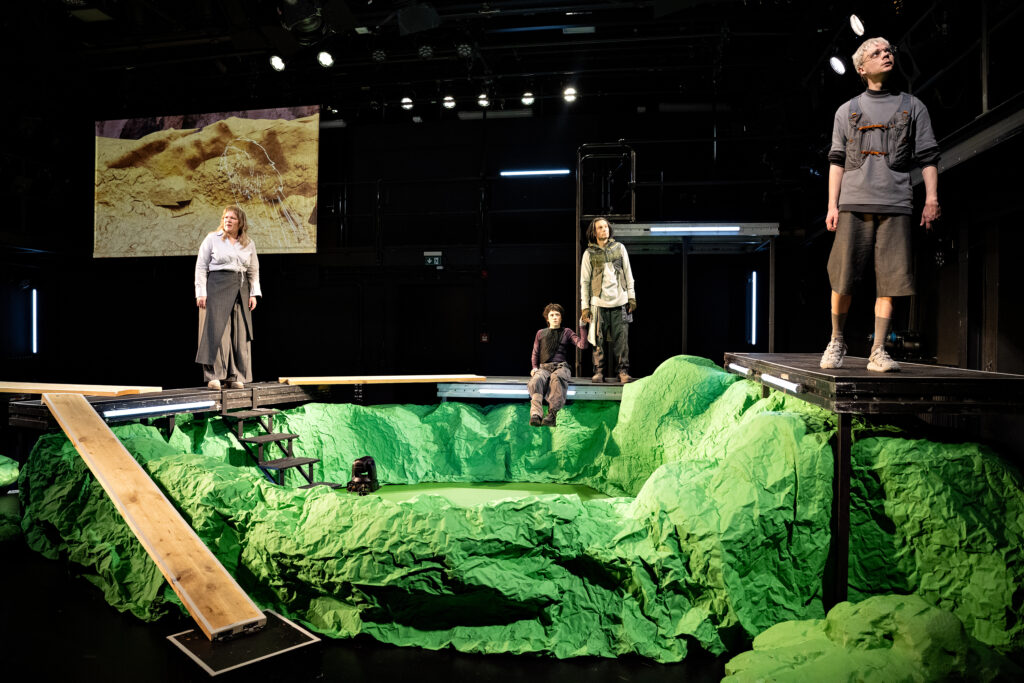
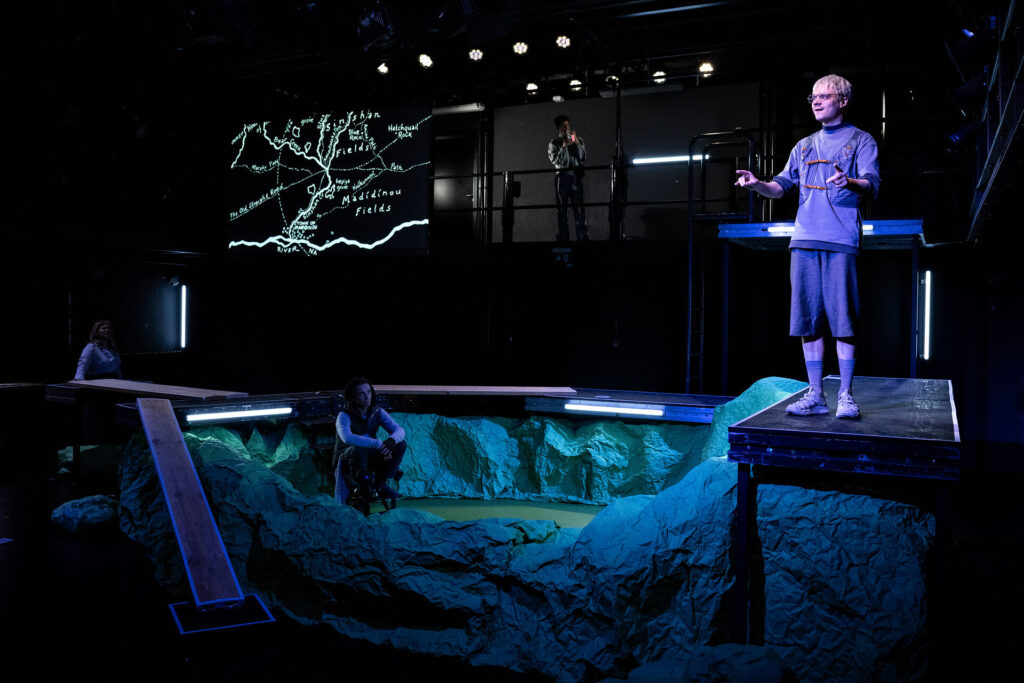
«With curiosity, the actors […] immerse themselves in F. Wiesel’s digital experimental lab. Their role as narrators is clearly defined. They wholeheartedly embrace the experiment of bringing objects and characters to life. The focus is on digital object theater, not analog performance. The archaeologists’ objects appear on the screen in oversized form. Using maps and nature images, F. Wiesel expands the setting in the digital space. The performers are projected into the digital image, thus appearing in the new context.[…] In doing so, the F. Wiesel collective astonishes with a breathtaking rush of images. […] F. Wiesel recounts fragments of dystopia through their digital dramaturgy. Objects and figures open the way into the surreal world of people who have lost their footing in life. The film images […] bring the audience back down to earth. Christian Schlaeffer’s animations build bridges here. As unsettling as the production’s content may be, F. Wiesel’s artistic concept is playful and light. Their drive to explore and carry puppet and object theater into the digital future whets the appetite for the innovative collective’s future projects.»
Elisabeth Maier / Fidena.de / 16.12.2025
« And just as challenging as it is to read this work by the grand dame of American fantasy literature—first published in 1985 and translated into German in 2023—the production also challenges the audience’s inquisitive spirit to piece together a complete picture from the vividly and compellingly presented fragments. […]The performers […] are, rather, narrators, reporters, or documentarians. Jacob Bussmann accompanies all of this with an ethereal live soundtrack and enchantingly beautiful songs in the language of the Kesh, while images of desolate, arid landscapes, wandering avatars, and individual found objects flicker across the large video screen, from which virtual lines, bodies, branches, and leaves proliferate. […] The interpretation, however, is left to the audience, who, after an hour and 50 minutes, can pack a wealth of individual images and impressions into a bag and take them home. »
Ute Mag / Mannheimer Morgen, 8.12.2025
«Even failures can help you advance, especially in theater, where the stage becomes a laboratory for literary and staging experiments. […] When a production unleashes such centrifugal forces, it’s easy to lose your bearings amid the dizzying whirl of impressions. To resist this danger, the actors […] refrain from theatrical extravagances. […] The video scenes are interspersed with overgrown shrubs, scurrying creatures, or cult objects that are difficult to interpret, which are conjured into the projections via augmented reality at the lab table on the left. This technique […] creates a fourth level of deconstruction. […] Anyone who picks out this or that mythical fragment for free association does so with a certain added value.”
Volker Oesterreich / Die Deutsche Bühne, 6.12.2025

A production of the Theater und Orchester Heidelberg.
 English (UK)
  Deutsch